
GAISAPP market insight · July 2026
Tokyo Is Being Repriced in 2026Tokyo Is Being Repriced in 2026
A data-backed GAISAPP market note on why Tokyo property is being repriced through land scarcity, limited new supply, rent support, inbound demand and global capital.A data-backed GAISAPP market note on why Tokyo property is being repriced through land scarcity, limited new supply, rent support, inbound demand and global capital.
Citation policy
Paragraph-level markers such as [1] link directly to the source list. Image credits are included in the same source section.
Tokyo’s property market in 2026 is not moving because of one simple story. It is being supported by a stack of forces that reinforce each other: scarce central land, expensive new supply, resilient rents, foreign-resident growth, tourism demand and institutional capital liquidity.[1][5][6]
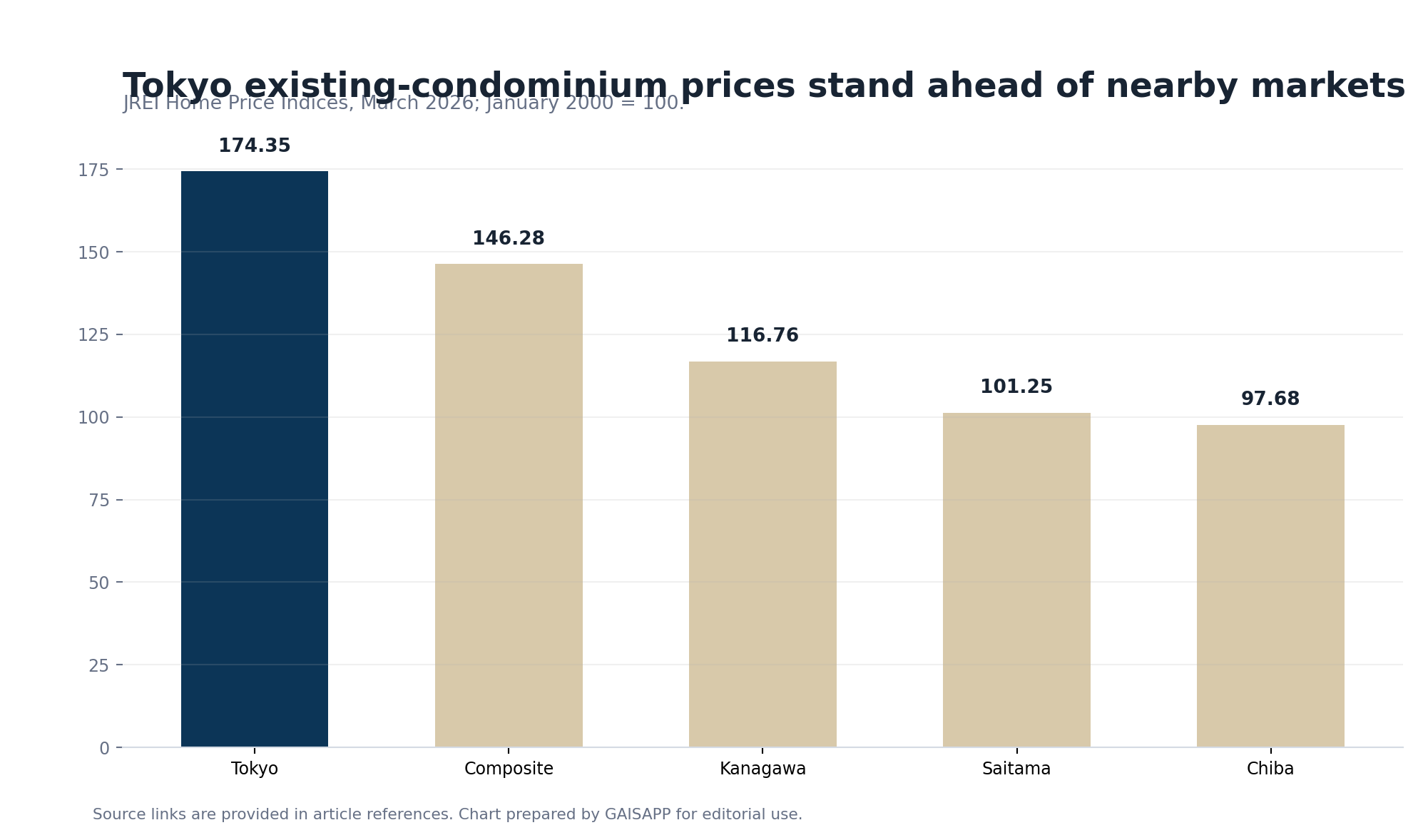
For international clients, the sharper question is not whether “prices are high.” The better question is which assets still look rational when judged against land scarcity, rental depth, daily-life utility and the future cost of replacing the same quality in the same location.[2][3]
01 · Land scarcityLand prices are rising across Tokyo, not only in trophy districts
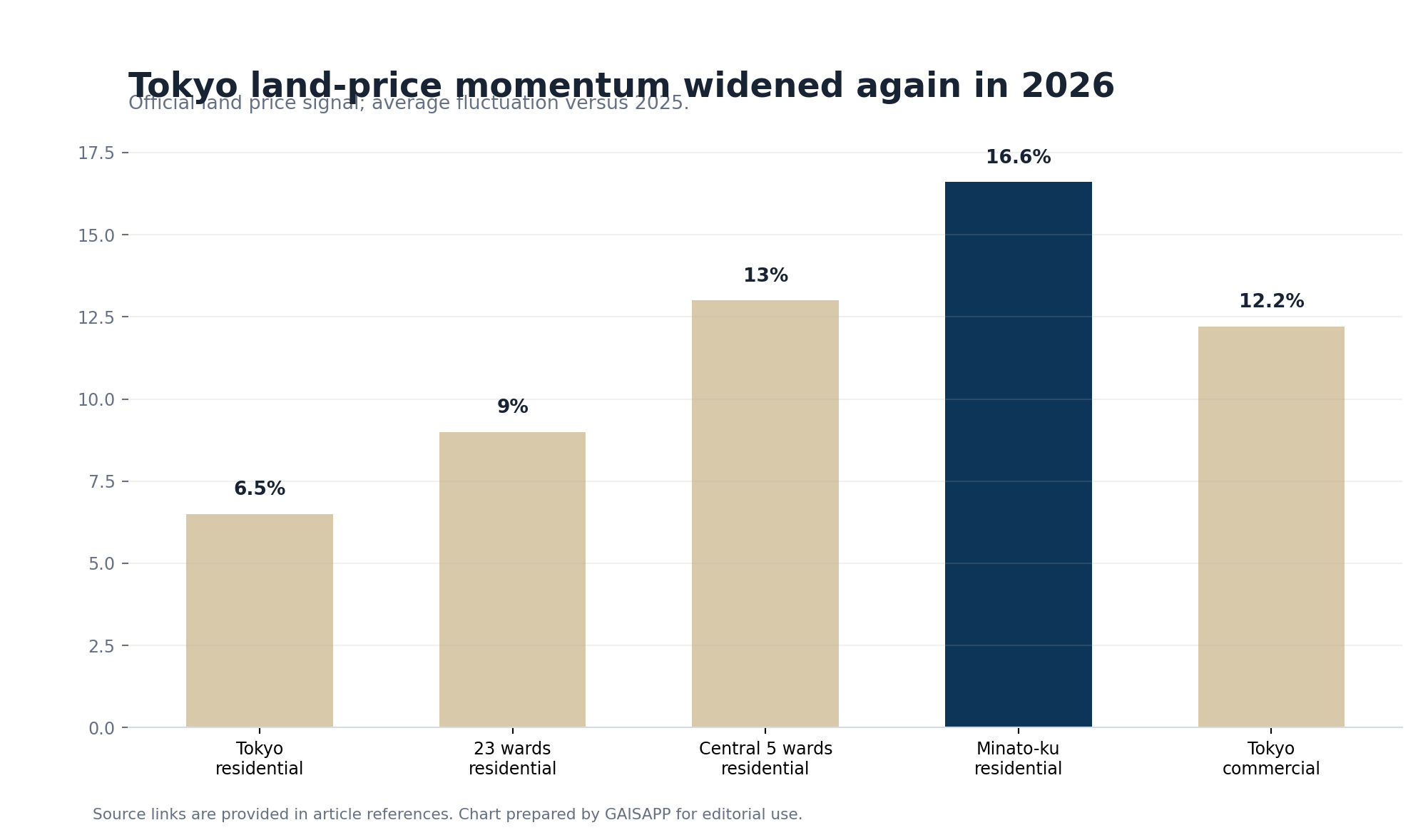
Tokyo’s 2026 official land-price data showed broad increases, with the 23 wards recording a 9.0% year-on-year residential land-price signal and Tokyo commercial land also rising strongly. The breadth matters because it suggests a citywide repricing cycle, not only one luxury tower or one neighborhood story.[1]
02 · Supply pressureNew condominium prices have crossed a new psychological zone
Greater Tokyo new-condominium supply fell to 21,659 units in fiscal 2025, while Tokyo 23-ward prices reached levels that make high-quality existing assets harder to replace. When new supply becomes limited and expensive, well-located existing residences gain strategic importance.[2]
03 · Rental depthRent growth and occupancy support the price story
A price boom without rental support can be fragile. Tokyo’s 2026 leasing data looks more balanced: Savills reported 23-ward rent growth and high occupancy in Q1 2026, suggesting that income fundamentals are also improving in the most useful residential locations.[4]
04 · Global demandForeign residents and visitors reinforce Tokyo’s housing story
Japan’s foreign-resident population passed four million at the end of 2025, while May 2026 visitor arrivals remained very high. Visitors do not automatically become tenants or buyers, but repeated exposure to Tokyo’s safety, convenience and culture strengthens the city’s global housing brand.[7][5]
05 · Institutional capitalGlobal capital still wants Tokyo
CBRE reported that Japan commercial real estate investment reached ¥2.043 trillion in Q1 2026, a record high for a first quarter, with overseas investors remaining active. For private buyers, that is a liquidity signal: Tokyo is not an isolated market but a mature real-estate investment ecosystem.[6]
Selection matters more in a rising market.
GAISAPP helps foreign buyers and owners read the property, the neighborhood, the legal conditions and the long-term use case before deciding.
Ask for a private consultationSources and reference links
- Tokyo Metropolitan Government, 2026 Official Land Prices for Tokyo
- Real Estate Economic Institute, Greater Tokyo New Condominium Market FY2025
- Japan Real Estate Institute, March 2026 Home Price Indices
- Savills, Tokyo Residential Leasing Q1/2026
- JNTO, visitor arrivals to Japan, May 2026
- CBRE, Japan Investment MarketView Q1 2026
- Immigration Services Agency of Japan, foreign residents at end-2025
- Mori Memorial Foundation, Global Power City Index 2025
- Image credit: Szymon Shields, via Pexels
- Pexels License
- Hero image credit: Halil Fatih Çetin, via Pexels