Market Insight / Investment
Tokyo Real Estate 2026: Short-Term Selectivity, Long-Term Allocation
A source-backed GAISAPP market article for international buyers, sellers and investors reading Tokyo in 2026: not as a simple rising-price story, but as a market where short-term discipline and long-term allocation logic now move together.
Tokyo real estate is no longer a simple story of uninterrupted price growth. By mid-2026, the market shows two movements at once: short-term selectivity and long-term allocation strength. That tension is exactly why international clients need a private advisory process rather than a generic listing page.
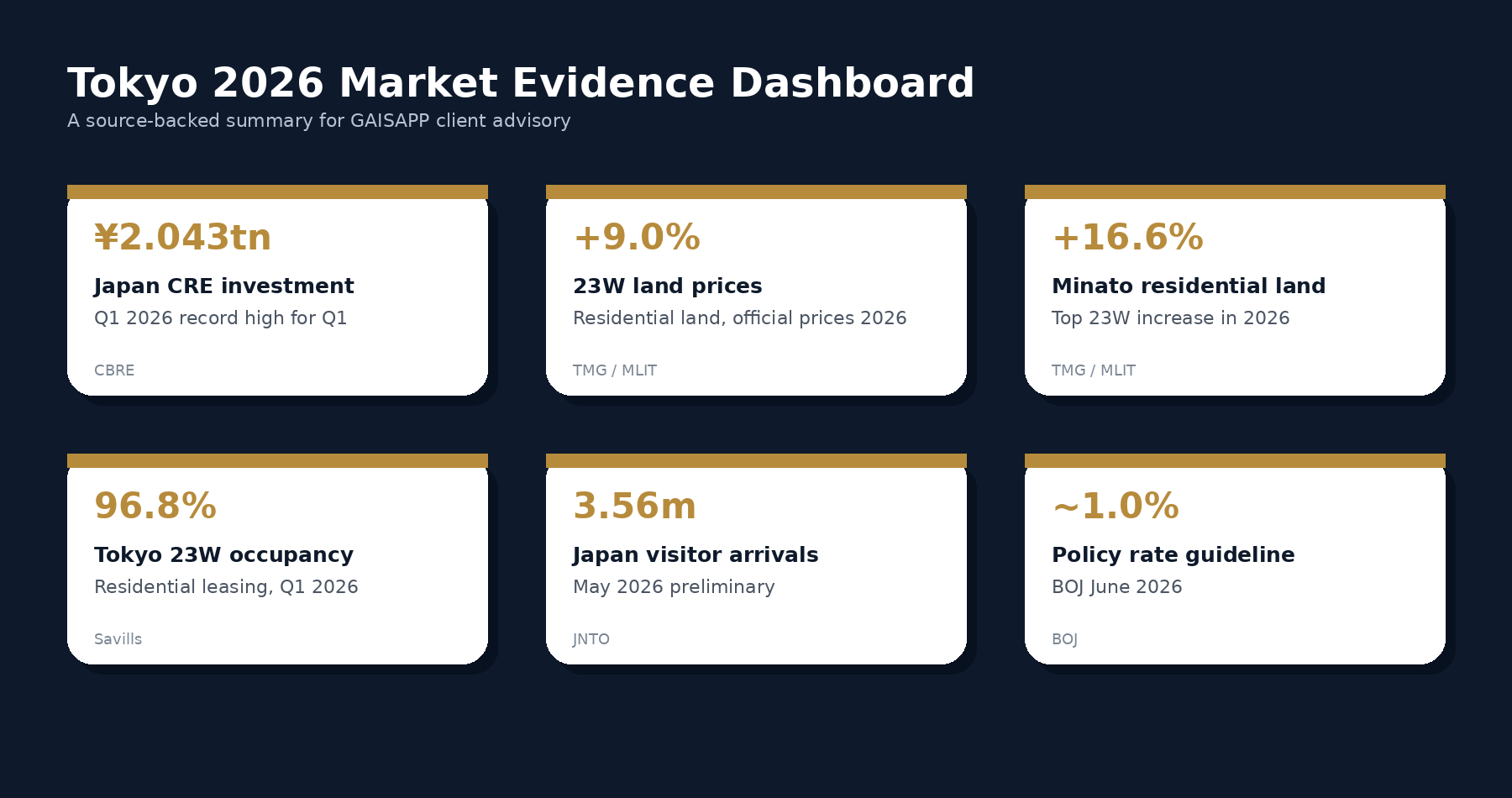
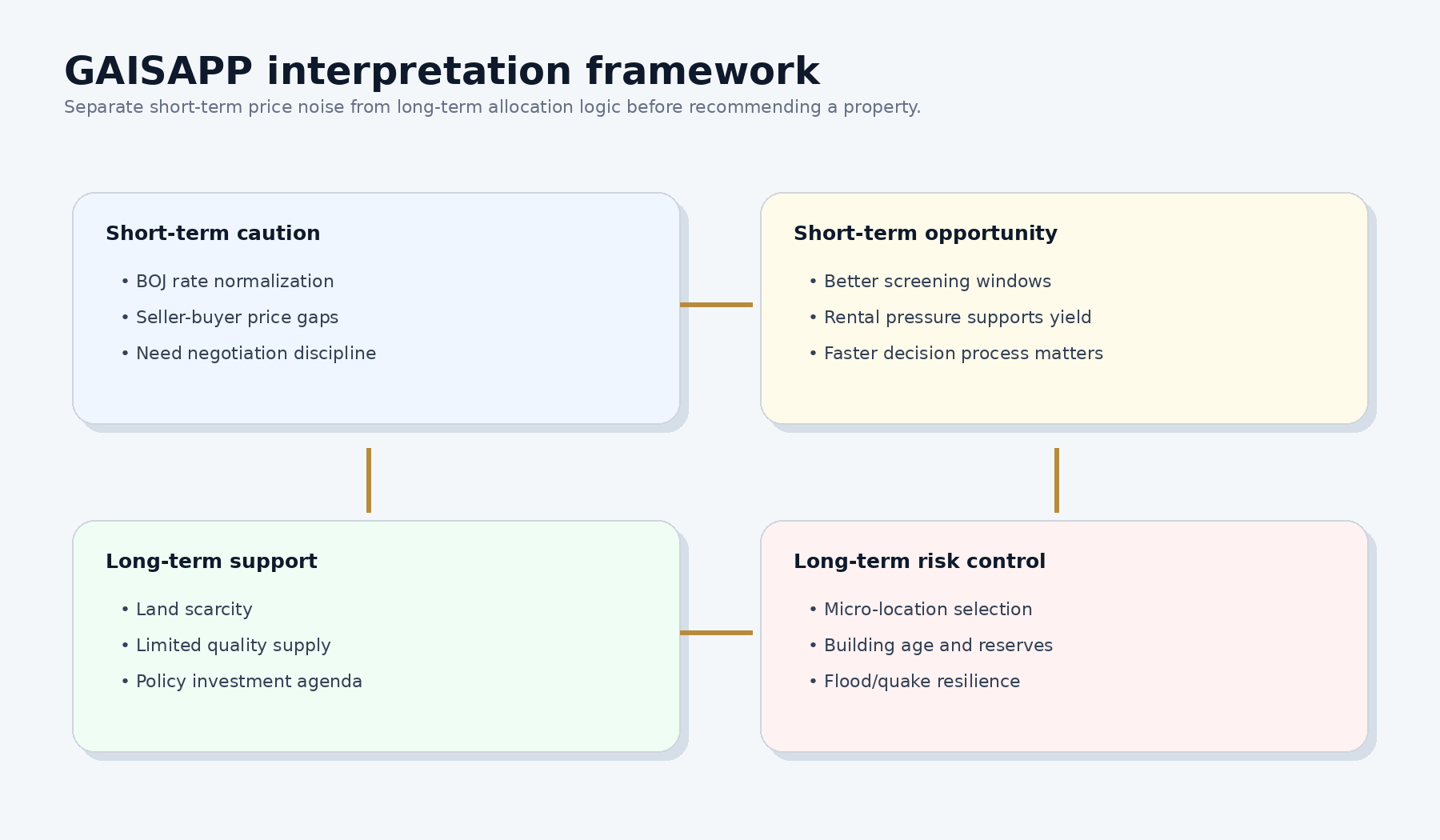
The short-term picture is tactical. The Bank of Japan moved the policy-rate guideline for the uncollateralized overnight call rate to around 1.0% in June 2026. Higher rate expectations change buyer psychology, financing assumptions and seller-buyer negotiations.[5]
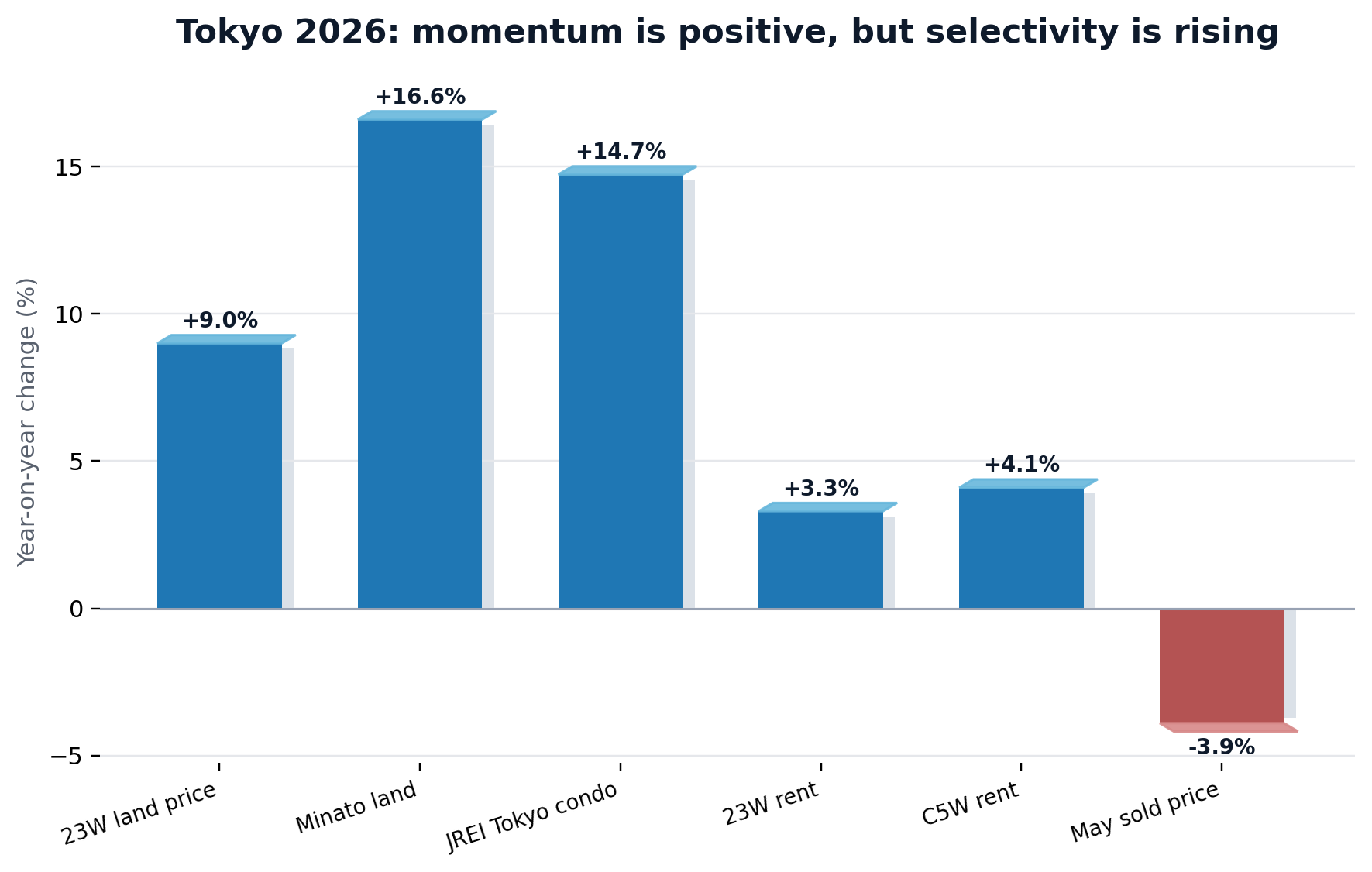
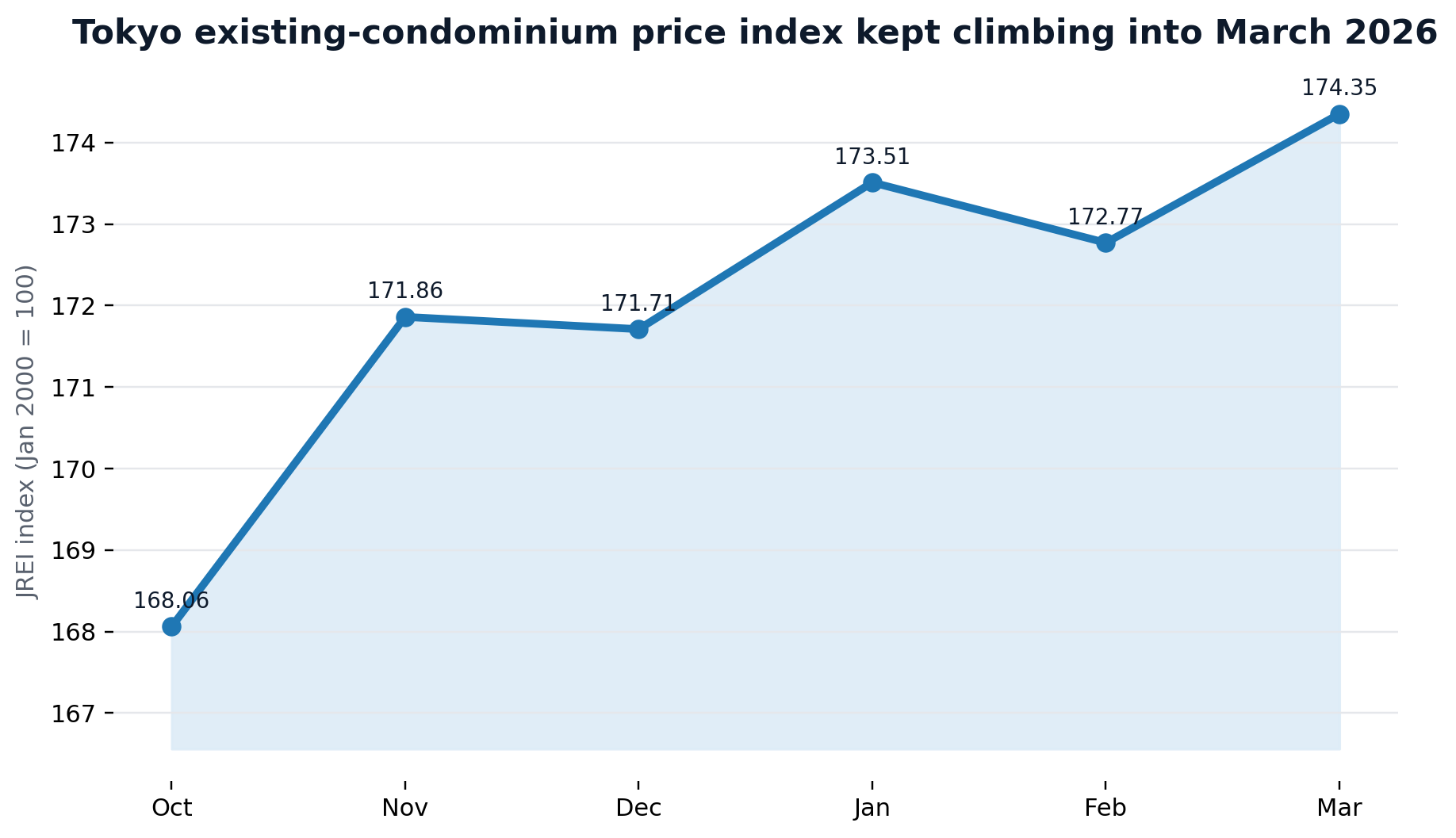
The long-term picture remains supported by hard urban fundamentals. Tokyo’s 23 wards saw residential land prices rise 9.0% in 2026, with Minato up 16.6%. JREI’s Tokyo existing-condominium index reached 174.35 in March 2026, up 14.73% year on year.[1][2]
01 · What moved2026 is becoming a verification year, not a retreat
The key signal is not one number. It is the convergence of rate normalization, stronger land prices, resilient rents, large visitor flows and active capital allocation. In a market like Tokyo, this does not mean every property deserves a premium. It means the best assets need sharper verification.
02 · Short termMore selective, not simply weaker
After several years of strong price growth, buyers are no longer operating in a purely “take it before it disappears” environment. Financing expectations have changed, resale data have become more mixed, and some asking-price indicators are running ahead of confirmed transaction prices. For international buyers, this is not a warning to avoid Tokyo. It is a warning to verify timing, building quality and price discipline more carefully.
03 · Long termThe land story remains structurally strong
Tokyo’s long-term case remains anchored in land. It is dense, transit-oriented and supply-constrained; the amount of high-quality, well-located residential land cannot expand quickly. The 2026 official land-price figures show that central Tokyo continues to command a premium, with all 23 wards positive for the fifth consecutive year in the cited data.[1]
04 · CondominiumsIndex momentum is visible, but asset selection matters more
JREI’s March 2026 Home Price Index placed Tokyo existing condominiums at 174.35, up 0.91% month on month and 14.73% year on year. The trend from late 2025 into early 2026 still shows upward pressure in the resale condominium index. However, index momentum does not mean every unit is equally attractive. Age, management, repair reserves, floor level, station access and future exit liquidity can create very different outcomes.[2]
05 · Rents and capitalTokyo is becoming an allocation story
A long-term property thesis is stronger when supported by rental fundamentals and institutional capital, not only by resale-price expectations. Savills reported Tokyo 23W mid-market rents rising 3.3% year on year in Q1/2026 with occupancy at 96.8%. CBRE reported Japan commercial real estate investment volume of ¥2.043 trillion in Q1/2026, a record high for a first quarter.[3][4]
That combination matters for international clients. Higher rents can make ownership more attractive for long-stay residents and can strengthen the income floor for investment properties. Institutional activity also indicates that Japan remains liquid enough for global allocation decisions even while interest rates normalize.
06 · Client strategyWhat this means for buyers, sellers and investors
For buyers, 2026 is a verification year. Good assets may remain expensive, but the gap between asking price and executable value is becoming more important. Buyers should focus on station access, building management, repair reserves, ownership restrictions, flood and earthquake resilience, rental comparables and exit depth.
For sellers, the backdrop is still strong in prime districts, but presentation quality matters. Documentation, building information, renovation history, management records and realistic pricing logic can help attract serious overseas clients. For investors, Tokyo remains attractive but less forgiving. The best cases combine a clear tenant story, resilient micro-location, conservative financing assumptions and a realistic holding period.
Read Tokyo with discipline before requesting details.
GAISAPP helps international clients move from market signals to property-level verification: ward, building, owner / agency confirmation, financing sensitivity and exit logic.
Start a private consultationSources and reference links
- RealEstate-Tokyo / official land prices 2026 — Tokyo 23W +9.0%, Minato +16.6%
- Japan Real Estate Institute — March 2026 JREI Home Price Indices
- Savills — Tokyo Residential Leasing Q1/2026
- CBRE — Japan Investment MarketView Q1 2026
- Bank of Japan — Change in the guideline for money market operations, June 16, 2026
- JNTO — Visitor arrivals to Japan, May 2026
- Reuters — Japan 2026 economic blueprint and public-private investment target
- Wikimedia Commons — Minato City, Tokyo, Japan image source
- Wikimedia Commons — Tokyo Station Marunouchi Building image source
Disclaimer
This article is general market commentary for informational and marketing use. It is not legal, tax, financing, appraisal or investment advice. Property information must be confirmed by owners, agencies and qualified professionals before any transaction or public use.